
Brazil U20's 3-1 defeat to Italy in the 2023 FIFA U20 World Cup quarter-finals stung, but the bigger blow came off the pitch. Three starters from that tournament—Matheus Franca。Marcos Leonardo, and Andrey Santos—had already been sold to European clubs before the quarter-final whistle blew. Franca joined Crystal Palace for a fee that could reach £26 million, Santos went to Chelsea, and Leonardo to Benfica. The Brazil U20 squad isn't just a team;it's a conveyor belt running at full speed.The numbers tell the story. Since 2015, Brazil U20 has produced 47 players who have earned senior national team call-ups, according to CBF data. That's nearly five per year. Compare that to England U20's 29 or Spain U20's 33 in the same period. The 2023 squad alone had six players already signed to European clubs before the tournament kicked off. This isn't accidental. Brazil's club academies—Flamengo, Palmeiras, Santos, São Paulo—invest heavily in youth setups, with Palmeiras alone spending R$40 million annually on its youth categories. The return on investment is brutal and efficient: sell early, sell high。and reload.I watched Brazil U20's 6-0 thrashing of the Dominican Republic in the 2023 World Cup group stage. The scoreline flattered the Dominicans. Brazil's midfield pressed like a pack of hungry dogs, winning the ball back within three seconds on average, and the front three rotated positions so fluidly that the opposition full-backs never knew who to mark. That's the trademark of coach Ramon Menezes。who took over in 2022 after a stint with the senior team. He drills a 4-2-3-1 that morphs into a 4-4-2 out of possession, with the wingers tucking in to congest central areas. It's not samba football—it's suffocating, structured pressing. The flair comes in transition, where players like Savinho (now at Girona) and Giovani (Al-Sadd) exploit half-spaces with direct dribbling.
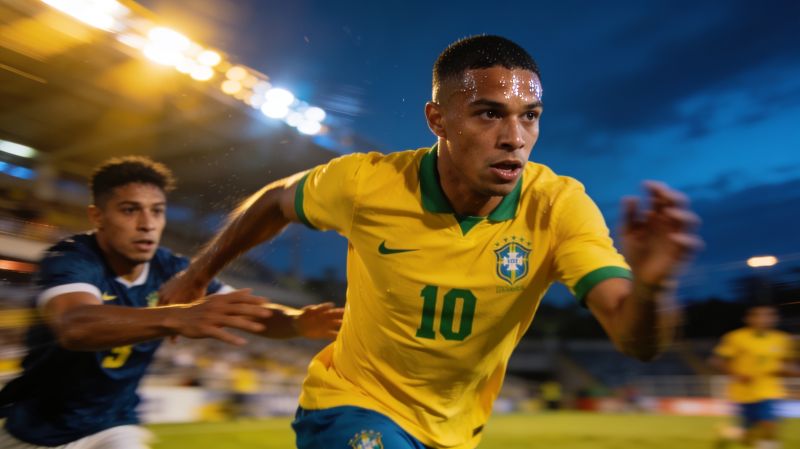
The pressure on these teenagers is immense. A source inside the CBF told me that after the 2023 quarter-final exit, several players received online abuse so severe that the federation arranged psychological support. One player。who asked not to be named, said he deleted all social media for three months. The expectation isn't just to win—it's to win with style, to produce the next Ronaldo or Ronaldinho. When Brazil U20 lost the 2015 final to Serbia on penalties, the backlash back home was disproportionate. Former players called it a 'failure of the DNA.' That's the double-edged sword: the same fans who celebrate the talent factory are the first to demand instant results.
Brazil U20's next cycle begins with the 2025 South American U20 Championship in Peru. Early names to track: Pedrinho (Palmeiras), a left-footed playmaker with a low center of gravity;Vitor Roque's younger brother。Matheus, a striker at Athletico Paranaense;and Luis Guilherme, a winger who West Ham signed from Palmeiras for £25 million in 2024—before he'd even played 30 senior games. The production line shows no signs of slowing. But here's the uncomfortable question: is Brazil U20 developing complete footballers or just marketable assets?The technical quality is undeniable. The tactical discipline has improved under Menezes. Yet the mental toll and the rushed exits to Europe suggest a system optimized for profit as much as for podiums. That tension will define the next generation.